On September 17, 2024, the Department of Cardiology published a study titled “Prognostic Value of Plasma IgG N-Glycome Traits in Pulmonary Arterial Hypertension” in the prestigious international cardiology journal J Am Coll Cardiol (IF=21.7). This groundbreaking research marks a significant advance in the field of IgG N-glycan analysis and lays a solid foundation for clinical translational research on pulmonary arterial hypertension in China.
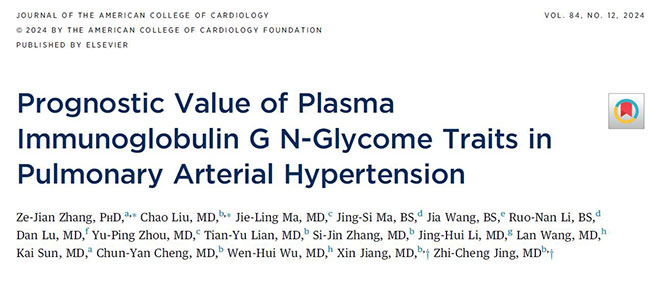
Pulmonary arterial hypertension (PAH) is a cardiovascular disease with a poor prognosis, and risk stratification is crucial for developing personalized treatment plans. This study is the first to demonstrate that fucose, a specific component of plasma immunoglobulin G (IgG) glycan chains, can serve as an independent prognostic marker for PAH patients. The findings show that IgG glycan chains not only provide additional prognostic information but also have the potential to become new therapeutic targets for PAH.
“This research is highly thought-provoking. It suggests potential avenues for further investigation into the mechanisms of PAH development and pathophysiology, and it may seed the development of entirely new therapeutic approaches. Although these results are in their nascent stages, they are highly inspiring, and we eagerly anticipate further research and updates on these intriguing glycan molecules,” commented Prof. Harrison W. Farber from Tufts Medical Center and Dr. Noah C. Schoenberg from Harvard Medical School.
Prof. Jing Zhicheng and Associate Prof. Jiang Xin from the Guangdong Provincial People’s Hospital are the co-corresponding authors of the paper. Assistant Researcher Zhang Zejian from Peking Union Medical College Hospital and Clinical Postdoctoral Fellow Liu Chao from the Guangdong Provincial People’s Hospital are the co-first authors.
Department of Cardiology
Updated: 19 September, 2024